AIn’t it interesting – Signal problem in Supply Chains
In my last post, I briefly touched upon how Supply Chains are essentially System of Signals...demand signals, inventory signals etc.
Peel that thought one layer deep, and the signal problem becomes a bit more nuanced. Most supply chain systems today are already full of signals
a) orders coming in
b) forecasts getting updated
c) inventory positions changing
d) shipment milestones being recorded
e) supplier confirmations arriving
So it is rarely about lack of signals, the issue is how those signals are interpreted.
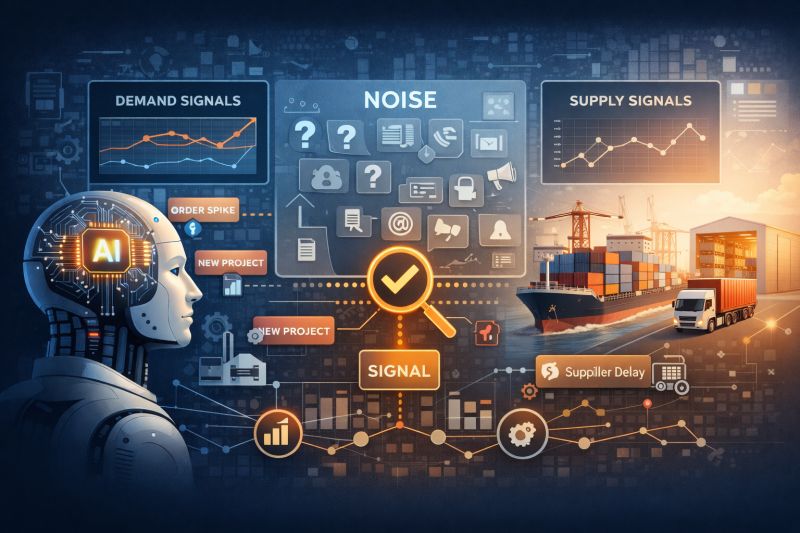
Take business demand as an example….a spike in orders could mean real increase in demand OR it could mean forward buying OR a distributor stocking up OR a one-time project order.
To the system, it is just a number, but the planners often rely on experience to interpret what that number actually means.
The same thing happens with suppliers., a supplier delay might be one-off OR it might be an early sign of a capacity issue OR the beginning of broader issue.
Signals exist everywhere, but their meaning isn’t always obvious. Hence, many supply chain teams spend a large part of their day interpreting signals by looking across dashboards, comparing reports, calling suppliers and cross checking with sales teams. They are trying to understand whether a signal is noise or something that requires action.
On the demand side (read enterprises), there seem to be a growing interest in AI enabled tools that will help identify which signals actually matter, and highlighting the few signals that truly require attention, and possibly recommended action.
On the supply side, many AI solutions appear to be evolving in that direction…
– identifying unusual demand patterns
– detecting emerging supply risks
– correlating signals across multiple systems
– prioritizing exceptions that could impact service or inventory
It feels like a subtle reframing of the problem, supply chains may not be suffering from too little information, they may be suffering from too many signals and too little clarity.
AIn’t it interesting how a large part of supply chain intelligence may simply be about separating signal from noise early enough for teams to act?